
Cash Flow
You Did the Work. You Deserve to Get Paid.

The job wrapped on time. The client shook your hand, smiled, and said the magic words: “We love it.” Weeks later, your crew has moved on, the materials have been paid for, and your bank account is still waiting for the money that was supposed to land days ago.
If you’ve ever refreshed your inbox at midnight looking for a payment that never shows up, you’re not alone. In construction, doing excellent work doesn’t automatically mean you get paid on time. This story-driven guide walks you through how to flip that script—by protecting your payments before the project even starts, so you can run your jobs with confidence instead of chasing money that’s already owed to you.
📌 Key Context: Industry research shows that over 80% of construction businesses experience late payments, and on average, they wait 30–60 days past agreed terms to get paid. For many small and mid-sized general contractors, a single large unpaid invoice can wipe out profit for the entire quarter.
The Night Jamie Realized “Good Work” Wasn’t Enough
By the time Jamie left the job site and sent the final change order, it was 1:47 a.m. The punch list was complete, the finishes were spotless, and the client had already replied with a line that every general contractor dreams of: “This is perfect. Exactly what we wanted.”
What Jamie didn’t know, staring at the glowing laptop in the dark, was that this project would turn into a three‑month saga of unanswered emails, awkward follow-ups, and a sinking feeling every time the subject line “Invoice Reminder” popped up in the sent folder. The work was done. The client was happy. But the money? Still missing in action. Contractor payments, it turned out, didn’t always follow the same logic as effort and excellence.
💡 Pro Tip: The moment you complete work without clear payment protection in place, you’re relying on goodwill—not a system. And in an industry where nearly 1 in 4 invoices is paid late, goodwill alone is a risky bet.
The Hard Truth: Getting Paid Starts Before the Project Does
Jamie eventually got paid—after dozens of nudges and a few not‑so‑gentle emails. But the real lesson wasn’t about chasing. It was this: if you wait until the end of a project to think about money, you’re already too late. Project payment security is built long before you mobilize a crew, order materials, or walk a site with the client. It begins the moment a potential client says, “So, how do we get started?”
The good news? You don’t need to become a lawyer, an accountant, or a professional debt collector. You just need a simple, repeatable system that makes it easy for clients to respect your work and your contractor payments —because the rules are clear from day one.
Industry surveys consistently show that cash flow problems, often driven by slow or missing payments, are a leading cause of failure for construction businesses. Protecting your payment terms up front isn’t a luxury—it’s survival.
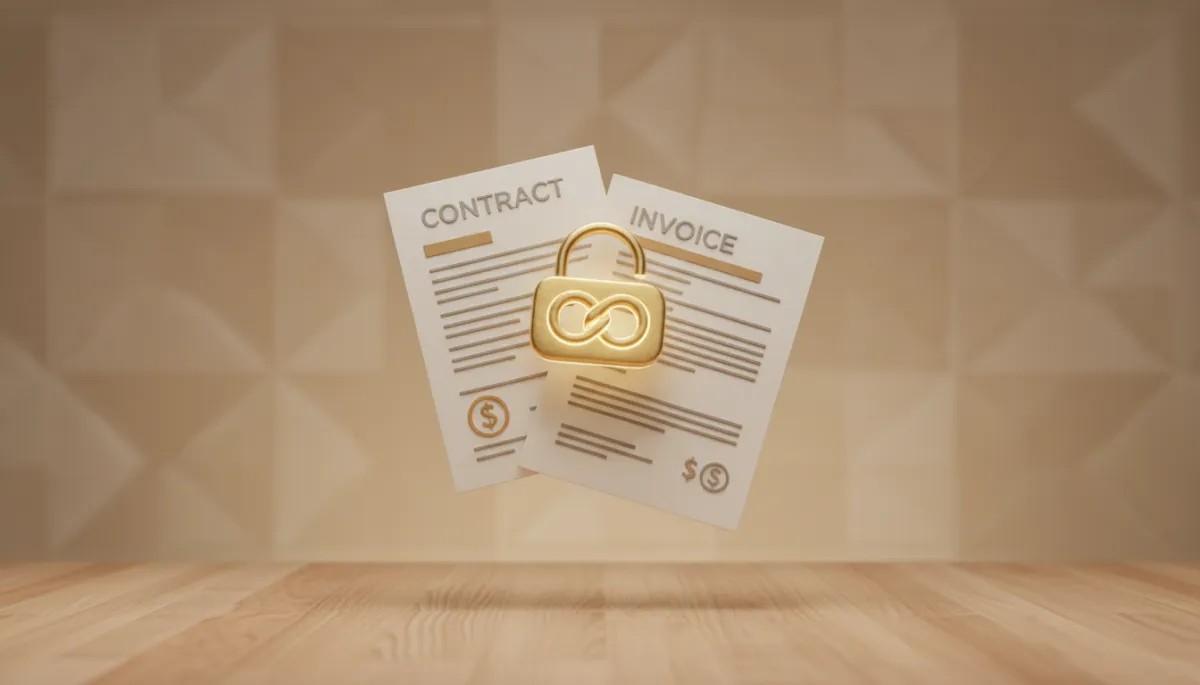
Clear contracts and structured invoices quietly guard your income in the background.
Step One: Turn “Let’s Work Together” into a Real Client Contract
When Jamie finally sat down to untangle what went wrong, the first red flag was obvious: there had been no formal agreement. Just a friendly email thread and a vague promise of “net 30” after completion. In other words, hope masquerading as a plan. Real payment protection starts with a real client contract —even for smaller jobs, even with “nice” clients, and especially with new ones.
Define the scope clearly. What exactly are you building or renovating? Which trades are included? How many change orders are allowed? What’s included—and what isn’t?
Set milestones and payment stages. For example, 30% upon contract signing, 40% at rough-in completion, 20% at substantial completion, 10% at final walkthrough. This spreads risk and keeps cash flowing.
Include due dates and late fees. Spell out when each payment is due, and what happens if it isn’t—like a small late fee, a pause in work, or the right to stop work until payment is received.
A contract doesn’t have to be cold or adversarial. In fact, clients who take their own projects seriously usually appreciate it. It tells them you’re organized, professional, and committed to a fair exchange: their investment for your expertise. It’s the foundation of project payment security.
📌 Key Takeaway: If it’s not in writing, it’s a wish. Put your payment terms into every client contract, every time.
Step Two: Let Your Invoices Do the Talking for You
Months after that late‑night final walkthrough, Jamie’s invoices looked very different. No more vague lines like “Construction work – $12,000.” Instead, each invoice told a clear, simple story: what was done, what was owed, and when it was due. These small invoice tips made a big emotional shift—from apologetically asking to confidently expecting to get paid.
Reference the contract. Add a line like “Per contract dated [date], Progress Payment #1 (30% deposit).”
Be specific. List phases, trades, and dates so clients instantly recognize what they’re paying for—framing, electrical rough-in, tile installation, final cleanup, and so on.
Make paying effortless. Include clear payment methods, clickable links, and instructions. Friction is the enemy of fast contractor payments.
💡 Data-Backed Tip: Studies on payment behavior show that invoices with clear due dates and digital payment options are paid significantly faster than vague, paper-based bills. Every bit of clarity you add can shave days or weeks off your payment timeline.
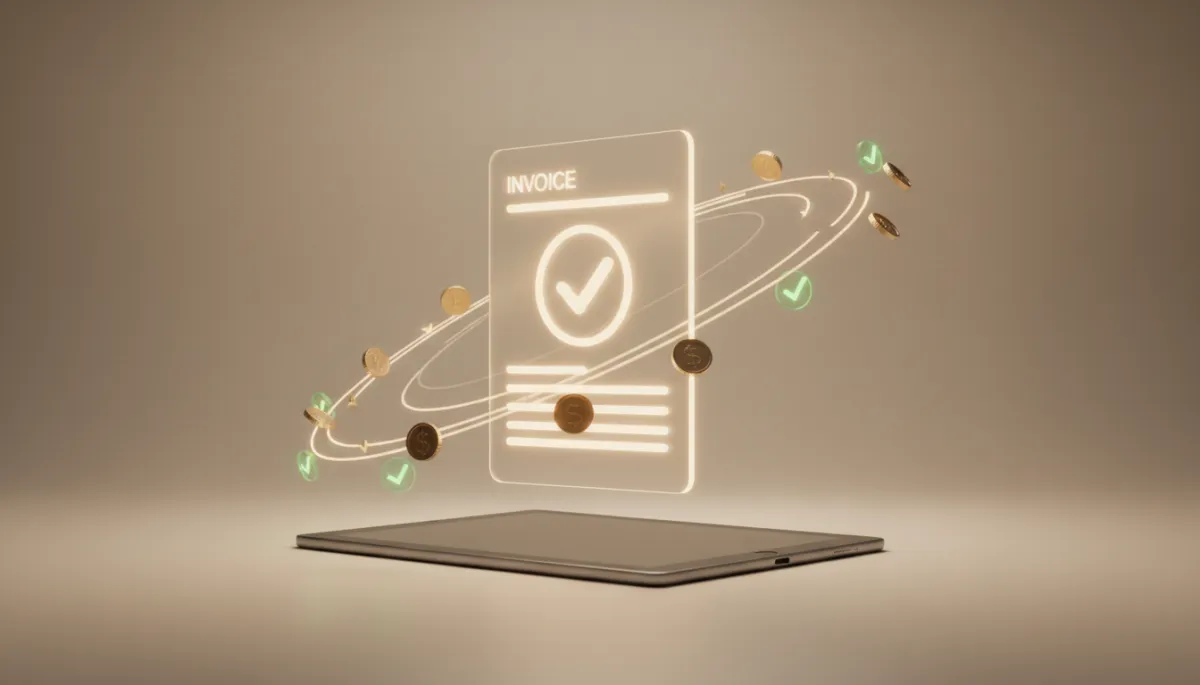
A clear, easy-to-pay invoice can turn awkward reminders into quick approvals.
Step Three: Build Payment Protection into Your Process
Over time, Jamie realized that payment protection wasn’t a one‑off document; it was a rhythm. A way of working. A system that quietly guarded every new project. Instead of scrambling after things went wrong, Jamie built simple safeguards into the process from the very first touch point.
Discovery call or site visit: Share your standard payment structure upfront—deposits, progress draws, and final payment terms—so there are no surprises later.
Proposal stage: Include your payment schedule and late payment policy directly in the proposal. When they say yes, they’re also saying yes to the way you get paid.
Before work begins: Don’t start until the deposit lands. Not “promised,” not “in processing”—actually received in your account.
This isn’t about mistrusting clients. It’s about respecting your own time, crew, and expertise. When payment expectations are woven into your process, project payment security stops feeling like a confrontation and starts feeling like part of how you do business.
💡 Pro Tip: If a client resists deposits or clear terms, that’s not a negotiation—it’s a warning sign.
Step Four: Use Tools That Put Project Payment Security on Autopilot
The more Jamie systemized, the less stressful money became. Instead of chasing, there were automated reminders. Instead of wondering when a payment might arrive, there were dashboards and notifications. Technology turned “I hope they pay soon” into “I’ll see the deposit hit on Tuesday.”
Contract platforms to send, sign, and store every client contract in one place.
Invoicing tools that schedule reminders, add late fees automatically, and accept multiple payment methods.
Escrow or milestone-based platforms that hold funds securely until each phase is complete.
📊 By the Numbers: Research into construction payments suggests that automated reminders and structured payment plans can reduce late payments by 20–30%. Even simple tools—like scheduled emails and online payment links—can dramatically improve how quickly you see money in your account.

When your systems protect you, you can focus on the craft, not the chasing.
Step Five: Rewrite the Story You Tell Yourself About Money
Somewhere along the way, many contractors absorb a quiet, damaging belief: that talking about money makes them difficult, that strong boundaries will scare away clients, that they should be grateful for the opportunity and sort out the details later. But every time Jamie agreed to “figure it out after,” the same story repeated—late payments, awkward emails, and the dull ache of resentment toward work they once loved doing.
The turning point wasn’t just a new template or tool. It was this simple decision: “My work deserves to be paid for, on time, every time.” From that moment, contractor payments stopped being an afterthought and became part of the craft itself. Protecting your income isn’t selfish; it’s sustainable. It’s what allows you to keep showing up, managing your crews, and serving the clients who truly value you.
When you remember that most contractors are fighting the same late-payment battle, it becomes easier to see strong payment terms not as being “pushy,” but as joining the small percentage of professionals who stay profitable and in control.
Your Next Project Can Tell a Different Story
Imagine your next project unfolding differently. The client signs a clear contract before you ever order materials or schedule subs. The deposit lands in your account, a quiet confirmation that they’re invested. Your invoices go out like clockwork—detailed, professional, easy to pay. Reminders happen automatically. Payments arrive when they’re supposed to. You deliver great work, and the story ends the way it should: you get paid , fully and on time, without chasing, begging, or burning out.
That version of your business isn’t a fantasy. It’s the natural result of a few deliberate choices:
Refusing to start work without a signed client contract and a deposit.
Treating invoice tips —clarity, structure, and ease of payment—as part of your brand experience.
Building project payment security into your workflow, not tacked on at the end.
You did the work. You poured in your time, your coordination, your skill. You’re not asking for a favor when you expect to be paid—you’re completing the exchange that makes your business possible. The sooner you protect that exchange, the sooner you step out of the role of “hopeful contractor” and into the role of trusted professional.
Stop Chasing. Start Protecting.
Somewhere tonight, another general contractor is sending a final invoice after a beautifully finished project, hoping it will be paid without drama. You don’t have to be that contractor. You can be the one who already knows how this story ends—because you set the terms at the beginning, not the end.
Put your payment protection in writing. Tighten your client contracts . Refine your invoices. Build systems that guard your contractor payments so you can do the work you love with the confidence that you’ll actually be rewarded for it. You did the work. You deserve to get paid—without the chase, without the stress, and without another sleepless night refreshing your inbox.
Numbers that finally make sense.
Tru-Financial Management gives contractors and small businesses clean books, real job costing, and tax-ready financials — all in one house.
Book a free consultation