
Financial Planning
From $500K to $2M: What Really Changes Financially
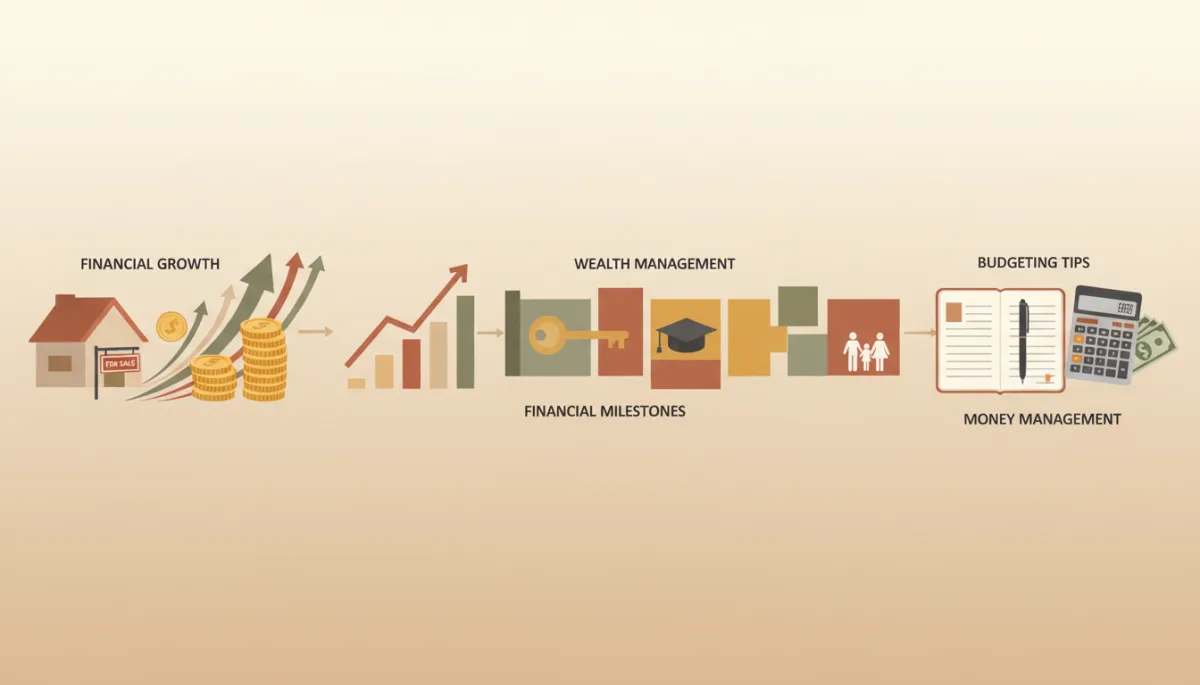
This is the story of what happens between “comfortable” and “truly wealthy”—and why the journey from $500K to $2M is less about luck and more about intentional money management, smart investment strategies, and a new way of seeing risk, work, and time.
Chapter 1: The Night $500K Didn’t Feel Like “Enough”
When Daniel first saw his net worth cross $500,000, he expected fireworks. Instead, he stared at the number on his screen, then at the stack of daycare bills on the kitchen counter, and felt something closer to quiet relief than celebration. It had taken a decade of promotions, careful budgeting, and saying “no” more often than “yes” to reach that financial milestone, yet life still felt… fragile.
Half a million sounded like a lot, but after subtracting the mortgage, the car loan, and the student debt that still lingered from his twenties, the number shrank fast. His financial growth was real, but it wasn’t freedom. Not yet. It was a strong foundation, not a finish line.
💡 Pro Tip: The first big wealth milestone usually feels less like “I’ve made it” and more like “I finally have something to lose.”
Chapter 2: The $500K Mindset — Protection Over Expansion
At around $500K, most people’s instinct is to protect, not to expand. That was Daniel. His money management revolved around avoiding disaster: building an emergency fund, paying down high-interest debt, making sure his family could stay in their home if he lost his job. His wealth management “strategy” was simple: contribute to his 401(k), keep some savings in a high-yield account, and hope the market didn’t crash at the wrong time.
His budgeting tips were practical and rigid. No new car until the old one died. Vacations planned with reward points. Eating out capped at once a week. This stage of money management is about control—knowing where every dollar goes, trimming waste, and proving to yourself that you can live below your means. It’s not glamorous, but it’s the soil where future financial growth takes root.

The first half-million is usually built on discipline, not dramatic bets.
Chapter 3: The Shift Toward Intentional Wealth Management
The real change began the day Daniel realized that saving alone wouldn’t get him where he wanted to go. He did the math: if he kept doing what he was doing, he might hit $1M by his late fifties. Respectable, sure. But the life he imagined—more time with his kids, the freedom to say “no” to a job that drained him, the ability to help his parents retire comfortably—that life needed more than respectable. It needed a plan.
That’s when wealth management stopped being a vague idea and became a deliberate practice. He met with a fee-only financial planner who didn’t try to sell him products, just clarity. Together, they mapped out what $2M could actually look like: target retirement age, college savings goals, a realistic home upgrade, even a “fun money” bucket for travel. For the first time, financial milestones were dates and numbers on a page, not just dreams in his head.
📌 Key Takeaway: Moving from $500K to $2M usually requires a shift from passive saving to active, intentional wealth management.
Chapter 4: Investment Strategies That Do the Heavy Lifting
The biggest difference between $500K and $2M isn’t how hard you work; it’s how hard your money works. For Daniel, this meant upgrading his investment strategies from “whatever my 401(k) defaults to” to a diversified, intentional portfolio that matched his goals and risk tolerance.
He shifted from a random mix of funds to broad, low-cost index funds and ETFs, giving him exposure to thousands of companies with minimal fees.
He added a small slice of real estate exposure, not by buying a rental property, but through REITs that fit neatly into his portfolio.
He set up automatic contributions so that investing became a habit, not a decision he had to remake every month.
Instead of chasing hot stocks, he chased consistency. Instead of timing the market, he respected time in the market. Over years, this quiet, steady financial growth did what frantic trading never could: it turned his money into a reliable partner.

Diversified investments turn steady contributions into meaningful long-term financial growth.
Chapter 5: Budgeting Tips That Quietly Add Hundreds of Thousands
People assume big wealth comes from big moves. Often, it comes from slightly better budgeting tips applied relentlessly over time. Daniel didn’t suddenly double his income. Instead, he made a series of small, stubborn choices:
When he got a raise, he increased his retirement contributions before he increased his lifestyle, capturing “invisible” money for his future self.
He tracked his spending for three months and noticed that “just a few takeout orders” a week added up to a weekend getaway he never took. He didn’t eliminate treats, but he made them deliberate, not automatic.
He created separate savings buckets for short-term goals—home repairs, vacations, gifts—so that emergencies didn’t have to go on a credit card.
💡 Pro Tip: The gap between what you earn and what you spend is the engine that powers every other part of money management.
Chapter 6: Crossing $1M — The Psychology of the Comma
Years later, Daniel refreshed his net worth tracker and saw seven digits for the first time. The second comma arrived quietly, on a Tuesday. No one at work knew. The kids still needed help with homework. The dog still needed to be walked. But something in his mind shifted: “If I can get here, I can get to $2M.”
At $1M, financial milestones stop feeling hypothetical and start feeling like coordinates on a map. The fear that once dominated his decisions softened. He still respected risk, but he wasn’t ruled by it. He could think longer term, take a calculated career risk, even consider starting a side business without feeling like one mistake would erase everything.

Each financial milestone changes not just your numbers, but your sense of possibility.
Chapter 7: Life at $2M — What Actually Changes
By the time Daniel reached a net worth of $2M, the changes in his life weren’t flashy. There was no yacht, no sports car in the driveway. The biggest difference was the quiet confidence woven into everyday decisions. His wealth management now included tax planning, estate considerations, and conversations about how to support causes he cared about, not just how to pay next month’s bills.
Work became more optional. He still chose to work, but from a place of preference, not panic.
Emergencies turned into inconveniences. A medical bill or a car repair no longer threatened his stability.
His investment strategies became slightly more conservative, protecting what he’d built while still allowing for continued financial growth.
What changed most was his relationship with time. Money could now buy him mornings at home, afternoons at school plays, and the freedom to say “not this year” to projects that didn’t align with his values. That’s the quiet power of thoughtful money management as you move from $500K to $2M: you don’t just upgrade your lifestyle; you upgrade your choices.
Chapter 8: Your Own Path from $500K to $2M
Your story will be different from Daniel’s. Your income, obligations, family situation, and opportunities are uniquely yours. But the principles that carried him from $500K to $2M are surprisingly universal: intentional wealth management, steady investment strategies, and day-to-day budgeting tips that create space for your money to grow.
Protect the downside early: build an emergency fund, eliminate toxic debt, and insure against disasters.
Design a simple, diversified portfolio and automate your investing so financial growth happens even on your busiest days.
Treat each financial milestone not as an endpoint but as a checkpoint: a moment to adjust your plan, not abandon it.

Writing down clear goals turns vague wishes into concrete financial milestones.
Somewhere between $500K and $2M, the story shifts from survival to intention. The numbers grow, yes, but so does your sense of agency. You’re no longer just reacting to life’s demands; you’re designing a life that fits your values. That’s the real change that wealth brings—not just more money, but more say in how your days are spent.
And one day, like Daniel, you may look at your accounts, see that second comma, and realize the journey from $500K to $2M wasn’t about becoming a different person. It was about becoming a more deliberate version of yourself—one choice, one dollar, and one money management decision at a time.
Numbers that finally make sense.
Tru-Financial Management gives contractors and small businesses clean books, real job costing, and tax-ready financials — all in one house.
Book a free consultation