
Job Costing
The Hidden Costs You’re Not Including in Your Estimates
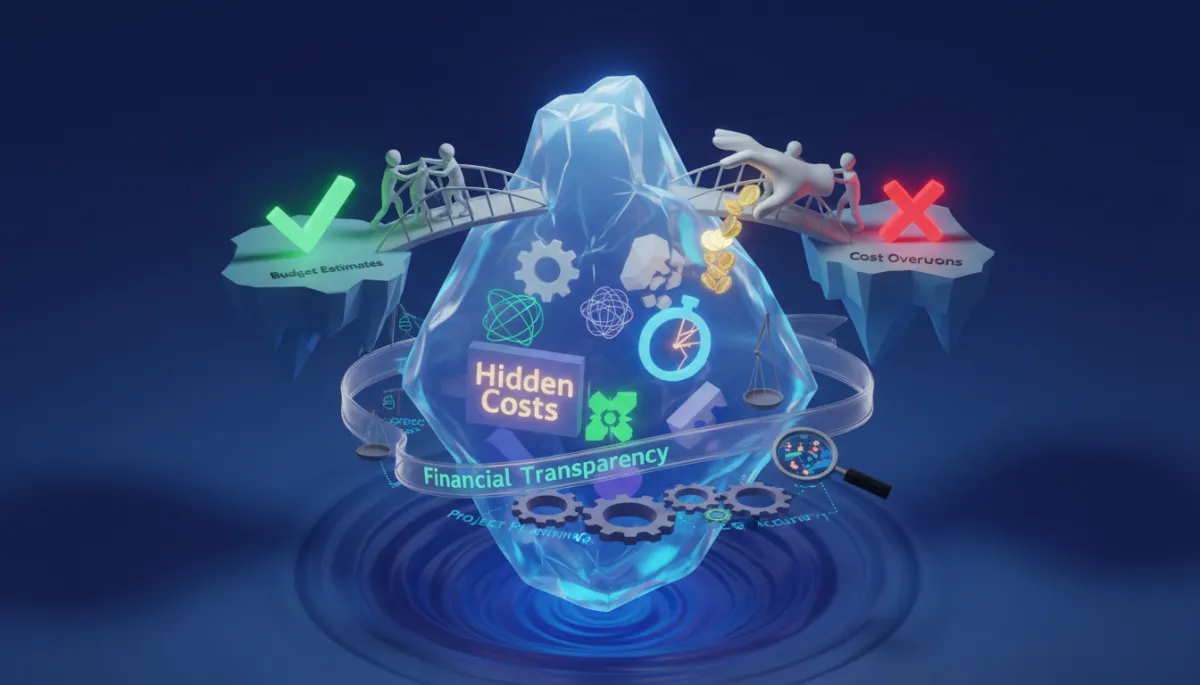
A storytelling journey through the quiet line items that quietly wreck Budget Estimates, derail Project Planning, and test your Financial Transparency.
The first time Maya thought she had nailed it, the conference room actually went quiet. Her presentation on the new marketing campaign glowed on the screen: timelines, Budget Estimates, projected return. The numbers were clean, the slides were sharp, and her manager nodded with that rare look of genuine approval.
Six weeks later, the same room felt smaller. The campaign was live, but the budget was bleeding. Vendor invoices were higher than expected. Extra software licenses had appeared out of nowhere. Overtime hours stacked up like bricks. The project wasn’t a disaster, but it wasn’t the smooth, confident story she had promised either. As the finance director walked through the numbers, one phrase kept repeating in her head like a drumbeat: “We didn’t see that coming.”
The Story Behind Every “Perfect” Estimate
If you’ve ever watched a confident Budget Estimate slowly unravel, you already know this story. On paper, the math looks flawless. Labor, materials, tools, maybe a line for contingency. You do the research, compare quotes, and build what feels like a responsible number. Yet somewhere between kickoff and completion, the project quietly drifts into the red. That drift is rarely about one big mistake. It’s about Hidden Costs — the ones your spreadsheet never asked you to name, but your project will absolutely force you to pay.
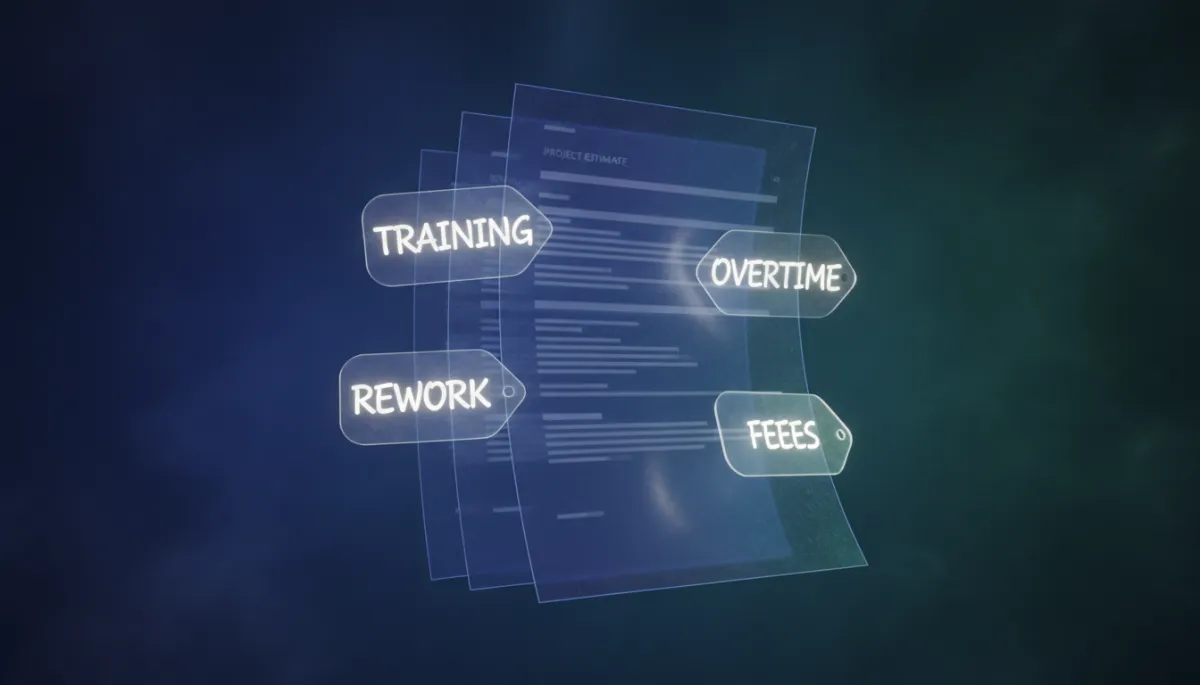
Hidden costs rarely shout; they slip quietly between your neat spreadsheet lines.
The Quiet Villains: Common Hidden Costs You Keep Missing
Think back to your last project. Now, walk through it like a movie in slow motion. You probably remember the big milestones, but the budget leaks happened in the quiet scenes. Those moments usually look like this:
A new tool or subscription you suddenly “have to” buy to finish the work.
Extra rounds of revisions because the first version wasn’t aligned with expectations.
Rush fees from vendors when schedules slip but deadlines don’t.
Training time for a new system that everyone “will just pick up.”
None of these feel dramatic in the moment. They feel reasonable, even necessary. But together, they become the difference between a tidy, controlled budget and the kind of Cost Overruns that show up in uncomfortable review meetings and tense email threads. Hidden Costs are rarely exotic; they are ordinary things you simply chose not to name during Project Planning.
💡 Pro Tip: If a cost has shown up in your last three projects, it’s not a surprise anymore. It’s a pattern—and it belongs in your next estimate.
Why We Keep Underestimating: The Psychology Behind Flawed Budget Estimates
Maya didn’t leave out those extra costs because she was careless. She left them out because she was human. Most of us suffer from what psychologists call the planning fallacy—the tendency to believe that this time, everything will go according to plan. We remember the best-case scenarios and quietly edit out the messy middle where delays, miscommunications, and small surprises live.
There’s another subtle pressure at play: the desire to please. A lower estimate often feels like good news. It makes stakeholders smile, helps proposals get approved, and makes you look efficient. But every time you shave off a little “just to make the number more attractive,” you trade short-term comfort for long-term risk. You’re not improving Estimate Accuracy; you’re quietly setting up the story for a difficult third act.

Every estimate balances optimism and reality; tipping too far invites overruns.
Turning the Lights On: Building Financial Transparency Into Your Planning
The moment Maya’s projects started to change wasn’t when she found a magic formula. It was when she decided to stop hiding the messy parts of her budgets. Instead of presenting a single, polished number, she began telling a fuller story—one that included the awkward truths about risk, uncertainty, and those pesky Hidden Costs that always seemed to show up uninvited.
She started by breaking her Budget Estimates into three layers:
Core costs — the obvious, visible items everyone expects: salaries, materials, vendor fees.
Operational costs — the support work that keeps the project moving: meetings, coordination, documentation, training, and testing.
Risk and uncertainty — contingency for delays, rework, scope questions, and the “unknown unknowns” that history had already proven would appear.
This wasn’t just a math exercise; it was a shift toward genuine Financial Transparency. Instead of hoping no one would notice when extra costs appeared later, she invited stakeholders to see the full landscape up front. She explained why a realistic estimate might look higher, but would protect them from painful surprises and public Cost Overruns down the road.
📌 Key Takeaway: Transparency is not about scaring people with big numbers. It’s about building trust by showing the story behind those numbers.
Planning With the Shadows in Mind: A New Approach to Project Planning
Imagine you’re about to start your next initiative. Instead of opening a blank spreadsheet and rushing to fill in line items, you pause and ask a different set of questions. Not just “What will this cost?” but “Where did we bleed money last time?” and “What surprised us that shouldn’t have?” This is how Project Planning changes when you start honoring the role of Hidden Costs in your story.
You review past projects and highlight every unexpected expense. Those become mandatory lines in your new estimate, not afterthoughts.
You talk to the people who actually do the work—the coordinators, technicians, analysts—and ask what really slows them down or forces them to spend more.
You build time and money for communication: workshops, clarifying sessions, and feedback loops that reduce rework and misalignment.
Suddenly, Estimate Accuracy stops being a guessing game and becomes a reflection of your organization’s memory. You’re no longer pretending this project lives in a perfect world. You’re acknowledging the cool shadows where real work actually happens—where people get sick, requirements change, and approvals take longer than anyone hoped.

Strong planning connects past lessons, real risks, and honest contingency into one roadmap.
From Damage Control to Quiet Confidence
Over time, something subtle changed in the way Maya’s projects felt. The meetings were less frantic. The email threads were shorter. Her team still encountered surprises—every project does—but they had room to absorb them. The budget wasn’t a tightrope anymore; it was a well-built bridge with guardrails and support beams no one saw at first glance.
Stakeholders started to notice. Not because she brought in every project under budget, but because there were fewer shocks and fewer emergency asks for more funding. Her reputation shifted from “the one who makes pretty decks” to “the one whose numbers you can actually trust.” That is the quiet power of respecting Hidden Costs and weaving Financial Transparency into every stage of your Project Planning.
Writing a Better Budget Story Next Time
Your next estimate is more than a table of numbers; it’s the first chapter of your project’s story. You can write it as a glossy fantasy where everything goes right and nothing unexpected happens. Or you can write it as a grounded, honest narrative that includes the shadows as well as the light—where Hidden Costs are named, risks are acknowledged, and your team has the resources to do the job properly.
When you sit down to plan, ask yourself: “What am I pretending won’t happen this time?” That answer is where your missing line items live. Bring them into the open. Add them to your Budget Estimates. Talk about them openly with your stakeholders. Every time you do, you move one step away from Cost Overruns and one step closer to true Estimate Accuracy—and to projects that end the way they began: with confidence, clarity, and everyone still willing to meet in the same room.
The costs are there whether you acknowledge them or not. The real question is simple: will they surprise you later, or will you choose to see them now?
Numbers that finally make sense.
Tru-Financial Management gives contractors and small businesses clean books, real job costing, and tax-ready financials — all in one house.
Book a free consultation