
Real Estate
A Year in Concrete and Steel: The Economic Story of Houston’s Construction Business
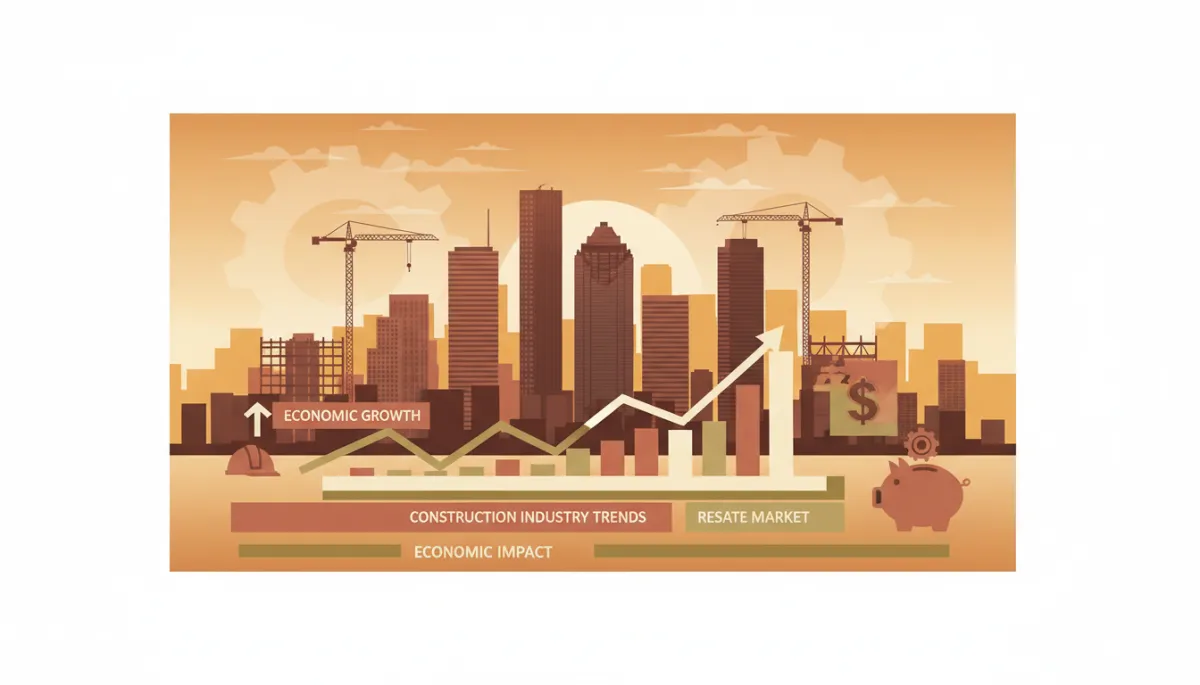
Follow a year in Houston construction, where every new slab, scaffold, and crane reflects the city’s shifting economy, its real estate market, and the people betting on long-term economic growth.
January: When the Year’s First Blueprint Meets the Economy
On a cool January morning in Houston, a project manager named Luis stands on a muddy lot off Highway 249, coffee in hand, watching surveyors mark the ground for a new distribution center. For him, this isn’t just another building project; it’s a thermometer for the year ahead. If the phones keep ringing and the bids keep coming, it means the broader economy is still fueling demand for Houston construction.
In 2026, the story opens on a cautiously optimistic note. Houston’s economy, still heavily influenced by energy but increasingly diversified, is growing. Regional forecasts point to steady economic growth powered by healthcare, logistics, and professional services alongside oil and gas. That growth shows up in Luis’s world as warehouse pads, road extensions, and tenant build-outs. The economic impact of each job is bigger than the concrete pour itself: every crew on-site, every truck delivery, and every material supplier is part of a much larger chain of local paychecks and tax revenue.

Early-year projects act as a real-time barometer for Houston’s economic confidence.
Spring: Real Estate Market Crosswinds and Shifting Demand
By spring, the real estate market begins to reveal its mood. In 2026, Houston’s housing inventory is rising sharply, with active listings up double digits year over year, according to Realtor.com and the Houston Association of Realtors. Prices are no longer racing ahead; median home values have edged slightly down, while average prices creep up, signaling a more balanced market where buyers have choices and sellers must sharpen their pricing strategy.
For Luis’s residential builder friends, that balance feels like a slow exhale. Inside the Loop, multifamily completions are expected to be only about 10% of last year’s volume, a clear sign that developers are easing off the gas after a heavy cycle of deliveries. Yet in suburbs like Katy and Sugar Land–Stafford, and along the northwest corridor, cranes are still common. These areas remain active, even if some face short-term oversupply. Investors continue to favor Houston apartments for their yields, with 2025 transaction activity outpacing Austin and Dallas–Fort Worth and offering higher cap rates. The construction industry trends are telling a nuanced story: less frenzy, more strategy.
For construction firms, this moderation matters. When the housing market cools “in the best possible way,” as some local industry leaders describe it, contractors can plan instead of chase. Scheduling stabilizes, labor can be retained rather than burned out, and materials can be ordered with fewer last-minute scrambles. The economic impact here is subtle but powerful: fewer boom-and-bust swings mean steadier employment and more sustainable margins for builders and trades.
💡 Story Insight: When inventory rises and prices stabilize, it may feel like a slowdown, but for many Houston construction firms it’s a chance to build smarter instead of simply building faster.
Summer: Industrial Heat and Infrastructure-Led Growth
As the Houston summer heat sets in, so does the pace on the industrial side. Along the Ship Channel and in submarkets like La Porte, Baytown, and Pasadena, the hum of activity is unmistakable. Project 11, the billion-dollar widening of the Houston Ship Channel, is nearing completion. Expanding the channel from 530 feet to 700 feet removes daylight restrictions for Neo-Panamax vessels and opens the door to 24/7 operations. For Houston construction companies, this is more than an engineering feat; it’s a catalyst for years of building projects in warehousing, distribution, and logistics.
Industrial tenant demand remains relatively robust, even as speculative development has pushed vacancies a bit higher. That tension—strong demand but temporarily elevated vacancy—shows how the economy can pull and push the sector at once. Developers race ahead of tenants, betting on long-term trade flows and population growth. Meanwhile, Houston’s office market tells a quieter tale. New office construction has been minimal for three years, the lightest period since 2010, but net absorption is finally outpacing new supply, and vacancy is slowly drifting down toward 21.2%. Rents are inching up by around 0.2% year over year, a sign of gradual healing rather than a sudden boom.

Project 11’s expansion seeds years of logistics and warehouse construction around the channel.
For contractors, this is where economic growth becomes concrete. Public infrastructure dollars, private capital, and global trade all converge in steel-framed warehouses and upgraded road networks. Each dock door and truck court represents jobs for specialty trades, from electricians to paving crews. The economic impact ripples outward: better logistics attract more companies, more companies hire more people, and those people need homes, schools, and retail—feeding the next round of Houston construction.
Labor, Technology, and the Human Side of the Boom
Yet every story of expansion in this city runs into the same constraint: people. By late summer, Luis finds himself making more calls to recruiters than to material suppliers. The Houston area added roughly 5,700 construction jobs year over year through late 2025, surpassing pre-pandemic levels. Still, like the rest of the country, the region faces a stubborn labor shortage. National reports show that 94% of contractors are struggling to fill roles, and nearly 40% of skilled workers are over 45, hinting at a looming wave of retirements.
To keep projects moving, Houston firms are leaning into technology. AI is no longer just a buzzword; about 38% of specialty contractors nationwide report measurable AI-driven impact, more than double the share in 2025. In Houston, subcontractors are using AI for cost estimation, bid management, scheduling, and documentation. Luis jokes that the software now catches the mistakes he used to wake up worrying about at 3 a.m. But local trade associations are quick to remind him: algorithms can optimize, yet skilled craft labor remains irreplaceable. The cranes still need hands, not just data.
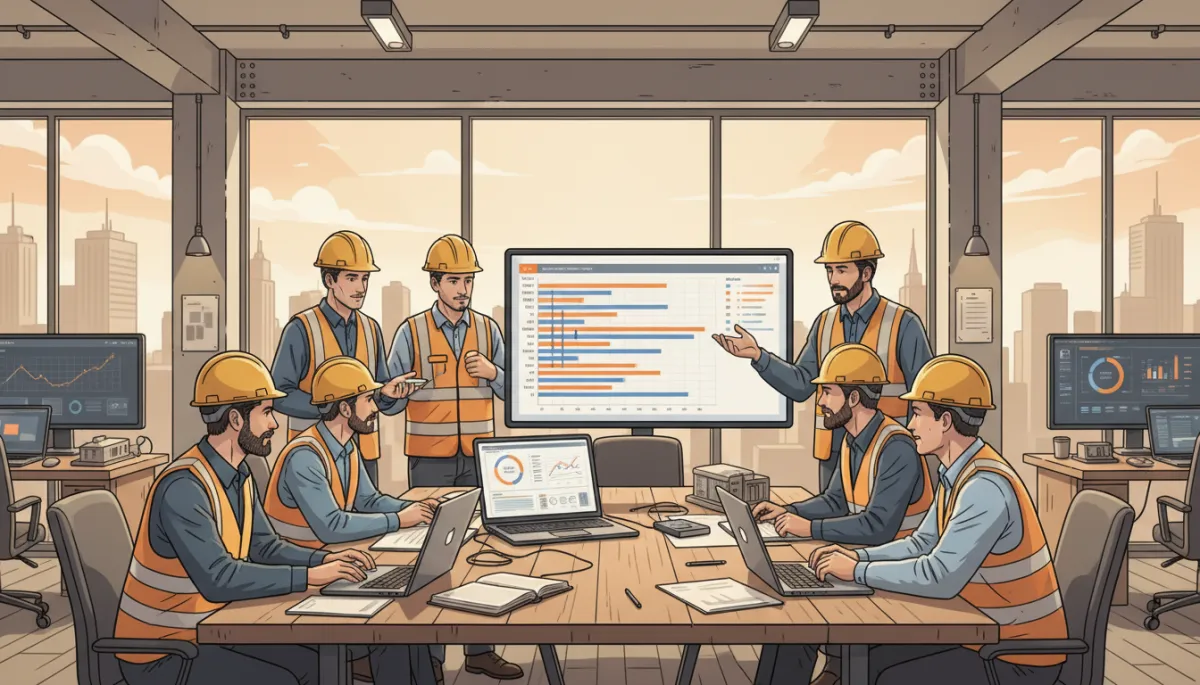
AI tools refine estimates and schedules, but Houston’s projects still hinge on skilled hands.
📌 Key Takeaway: Labor shortages and rising tech adoption are shaping new construction industry trends, where firms blend digital tools with traditional craftsmanship to stay competitive.
Fall and Winter: Interest Rates, Risk, and Resilience
As the year winds down, the real estate market in Houston settles into a new rhythm. Mortgage rates, while still elevated compared with the ultra-low era, have eased slightly, hovering a bit above 6%. According to local data, that shift has shaved roughly $149 off the monthly payment on a median-priced home compared with a year earlier. Buyers feel a little less squeezed; sellers, on the other hand, must accept that bidding wars are now the exception, not the rule.
For construction businesses, interest rates act like a dimmer switch on demand. Higher financing costs can delay or downsize projects, especially in the mid-range housing segment where sales have cooled. But Houston’s underlying fundamentals—population growth, relative affordability, and a responsive supply pipeline—keep long-term prospects solid. Forecasts call for modest price appreciation of around 3–5% annually through 2027, assuming the energy sector avoids major shocks. For Luis, that translates into a pipeline that may ebb and flow with the seasons, but rarely runs dry.
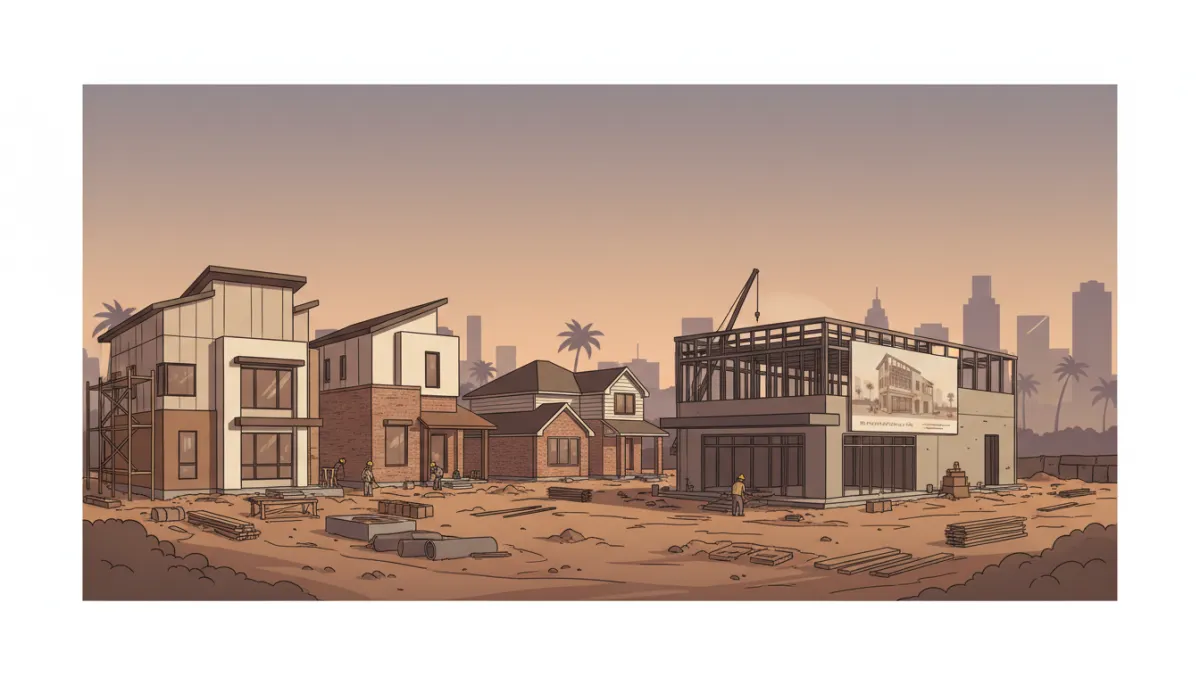
Balanced housing conditions support steady, if slower, construction across Houston’s neighborhoods.
The Year in Review: What Houston’s Construction Economy Really Tells Us
Looking back over the year, the economic perspective of the construction business in Houston reads like a layered narrative rather than a simple boom-or-bust plot. Multifamily supply inside the Loop has cooled, but suburban rooftops keep rising. Industrial and logistics projects thrive on the back of Project 11 and Houston’s role as a global gateway. Office construction remains subdued, yet leasing trends hint at gradual healing. Throughout, labor shortages and technology adoption shape how efficiently those building projects move from idea to ribbon-cutting.
The economy affects Houston construction differently in each season of the year. In the first quarter, it shows up in the number of bids on Luis’s desk. By mid-year, it’s visible in the mix of projects—more warehouses here, fewer downtown towers there. In the fall, it’s felt in financing calls, interest rate updates, and revised pro formas. And by December, the true economic impact is tallied in paychecks issued, apprentices trained, square feet delivered, and neighborhoods reshaped.
Above all, Houston’s construction story is one of resilience. This is a city that has rebuilt after hurricanes, adapted to energy cycles, and embraced new technologies without losing sight of the trades that make every skyline possible. As long as ships keep entering the widened channel, families keep arriving in search of opportunity, and businesses keep betting on Texas, the cranes on Houston’s horizon will continue to trace the outline of its economic growth.
For Luis—and thousands like him—the end of the year isn’t just another page torn off the calendar. It’s a ledger of risks taken, jobs created, and city blocks transformed. And as he rolls out the first blueprint of the new year, he knows that every line on that drawing is connected to the broader forces of the real estate market, the regional economy, and the evolving construction industry trends that keep Houston building, season after season.
Numbers that finally make sense.
Tru-Financial Management gives contractors and small businesses clean books, real job costing, and tax-ready financials — all in one house.
Book a free consultation