
Real Estate
Construction Growth in Houston: How Building is Shaping the City’s Next Decade
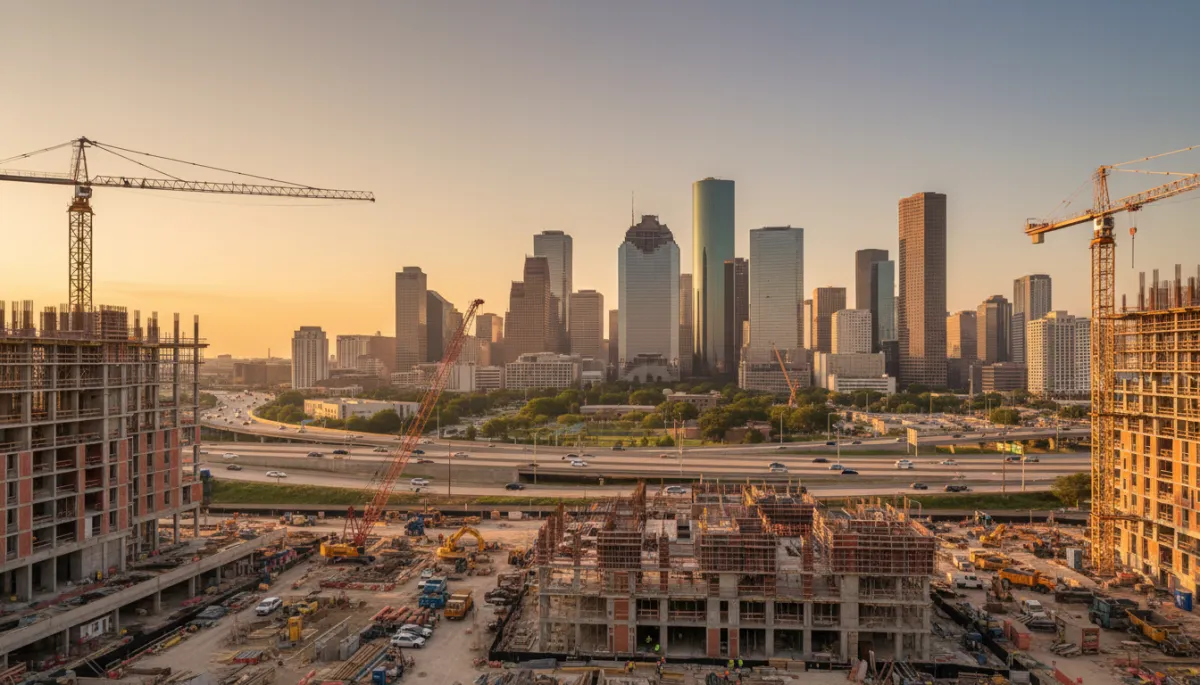
Houston’s skyline and suburbs are changing rapidly. From industrial hubs near the Port of Houston to mixed-use districts in the suburbs, the pace of construction is redefining how people live, work, and invest across the metro. This article examines the current state of Construction Houston, the forces behind Houston Growth, and the Real Estate Trends that are guiding decisions for developers, businesses, and residents in 2026 and beyond.
Industrial Construction: The Backbone of Houston’s Expansion
Nowhere is Construction Houston more visible than in the industrial sector. As of late 2025 and early 2026, an estimated 21 to 25 million square feet of industrial space is under construction across the metro, supported by resilient demand from logistics, manufacturing, and energy-related users. Vacancy rates around 7–7.5% and rent growth between 3% and 8% year-over-year signal a market that is expanding without tipping into oversupply, according to recent industry reports from firms such as Cushman & Wakefield and CRE Daily.
In Q4 2025 alone, Houston recorded 8.3 million square feet of net absorption—more than triple the prior quarter—and annual absorption reached 13.6 million square feet. Developers delivered roughly 17 million square feet that year yet still kept 129 projects underway, underscoring strong confidence in the region’s economic base. This industrial surge underpins broader Economic Development, supporting thousands of jobs tied to warehousing, e-commerce, petrochemicals, and port activity, and it positions Houston as one of the nation’s most active industrial markets heading into 2026.
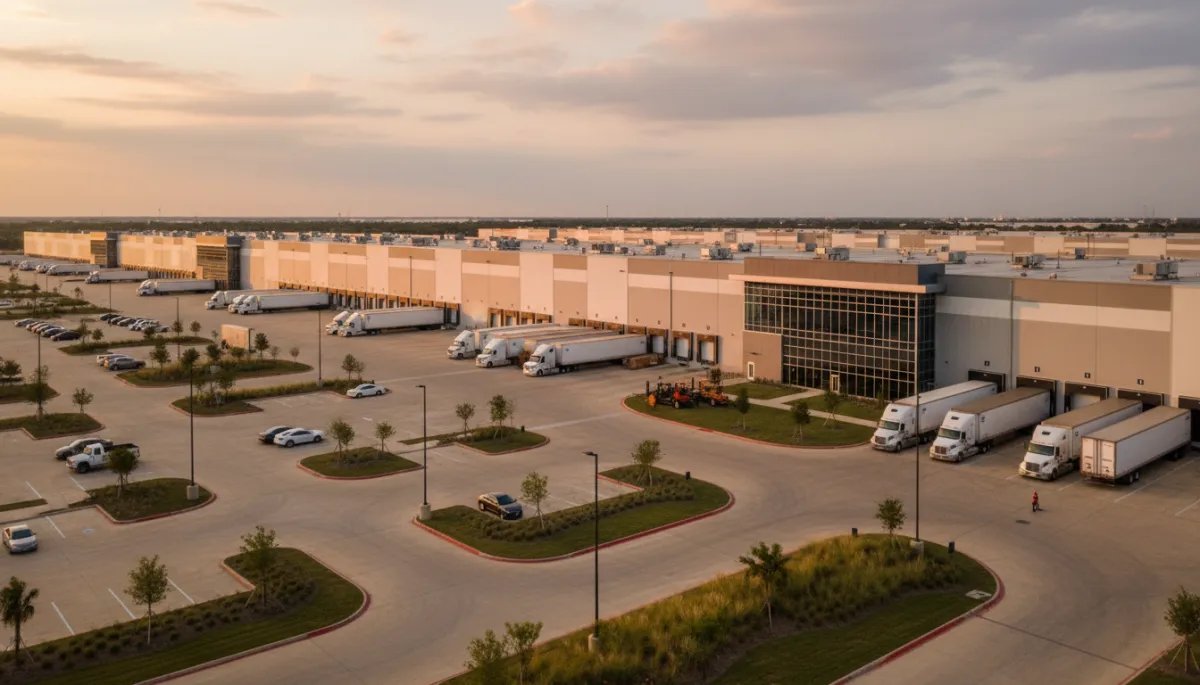
Industrial development near the Port of Houston continues to anchor regional job growth.
Multifamily and Residential: Cooling Construction, Evolving Demand
While industrial projects accelerate, multifamily construction is entering a more cautious phase. After ranking among the top U.S. metros for apartment deliveries in 2025—with more than 14,000 new units—Houston is seeing a sharp slowdown in 2026. Research from Marcus & Millichap and Institutional Property Advisors indicates that completions are on track to reach their lowest level since 2013, particularly within the I‑610 Loop, where deliveries may total only 10% of 2025’s volume. Rising construction costs, higher interest rates, and flattening rent growth are all contributing to this recalibration.
At the same time, the broader housing market is stabilizing. Greater Houston now has roughly 34,500 single-family listings, representing 4.5–4.7 months of inventory—one of the most balanced levels since 2019. Homes are staying on the market longer, and price growth has moderated. According to the Houston Association of REALTORS®, townhome and condo values dipped around 3.5% in early 2026, while median single-family prices softened slightly after peaking in 2024. For many households, this shift in Real Estate Trends translates into more negotiating power and improved affordability, even as insurance, taxes, and maintenance costs remain concerns.
A notable trend shaping Houston Growth is the rise of build-to-rent communities. Houston ranks among the top U.S. markets for single-family rental developments, with thousands of units either delivered or in the pipeline. These neighborhoods, often located in fast-growing suburbs like Katy, Waller County, and Fulshear, offer the space and privacy of detached homes with the flexibility of renting. This model caters to residents who value mobility or are priced out of homeownership, and it is becoming a core component of the region’s long-term Urban Expansion.
Office, Retail, and Mixed-Use: Selective but Strategic Building Projects
Office construction in Houston remains measured. Vacancy rates in the mid‑20% range have kept speculative development in check, and total office inventory is expected to grow by less than 1% in 2026. However, there are bright spots: tenants are gravitating toward high-quality Class A and “trophy” properties, where vacancy has fallen below 10%. Developers such as Midway are responding with targeted Building Projects like the planned 19-story CityCentre Six office tower, designed to meet demand for amenity-rich, walkable environments rather than traditional stand-alone towers.
Retail and mixed-use projects, by contrast, are regaining momentum. After a period of limited new supply, roughly 2.8 million square feet of retail space was under construction in late 2025, and that activity is rolling into 2026. High-profile developments such as Texas Heritage Marketplace in Katy/Waller County, Magnolia Town Center in Montgomery County, and Fulshear Central illustrate how retail is increasingly bundled with residential, office, and entertainment components. These projects not only respond to consumer demand for convenience and experiences but also support local Economic Development by creating employment hubs outside the traditional urban core.
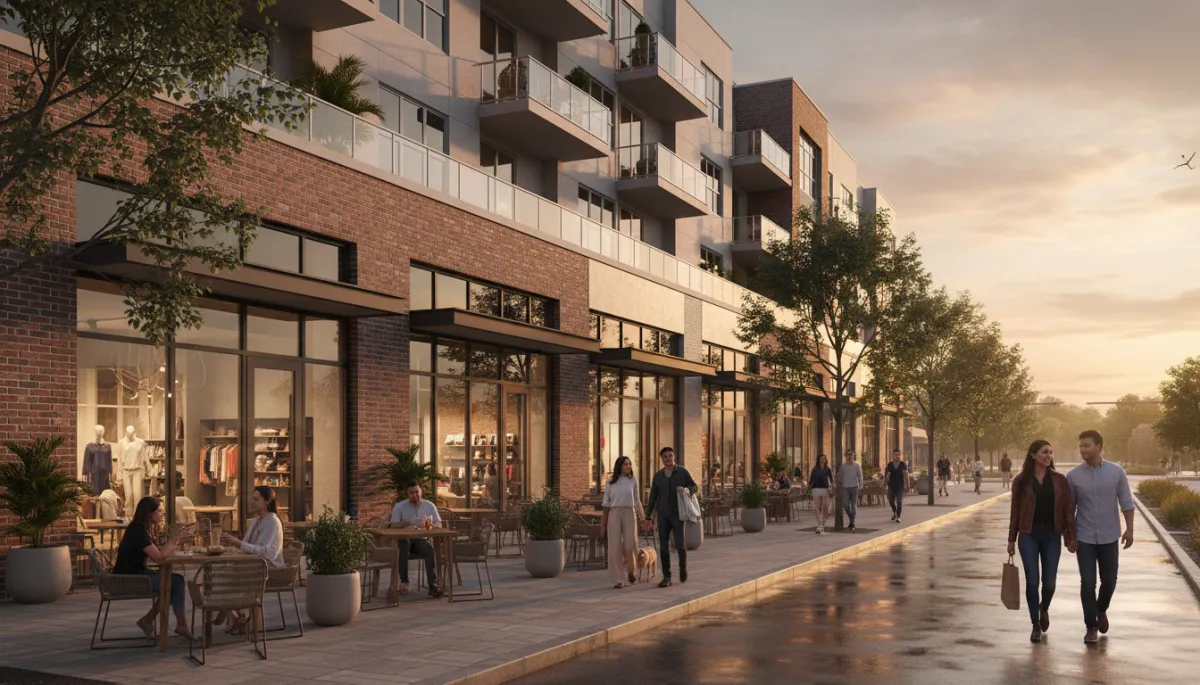
Mixed-use districts blend retail, office, and housing, supporting walkable suburban centers.
Public Infrastructure and Civic Investment: Foundations for Long-Term Economic Development
Behind the cranes and concrete, a wave of public and institutional investment is reshaping how residents and visitors move through and experience the city. The Texas Department of Transportation has earmarked approximately $1.7 billion in construction spending for FY 2026, rising to more than $3.1 billion in FY 2027. These funds are directed toward highway upgrades, safety improvements, and beautification efforts that will be especially visible ahead of the FIFA World Cup matches Houston is set to host in 2026. Such projects are central to the region’s long-term Economic Development, improving connectivity and reliability for freight, commuters, and tourists alike.
One of the most significant single projects is the $2.5 billion transformation of Terminal B at George Bush Intercontinental Airport, scheduled for completion before the end of 2026. The expansion is expected to create roughly 3,000 jobs during construction and substantially increase passenger capacity, positioning Houston as an even more competitive global gateway. Complementary initiatives—such as the University of Houston’s $58 million Innovation Hub, the Rice University Gateway Project, and improvements at Miller Outdoor Theatre and along Buffalo Bayou East—demonstrate how civic and educational institutions are investing in the public realm. Together, these initiatives reinforce the narrative of sustained Houston Growth that is not limited to private real estate alone.
Urban Expansion: Suburbs, Corridors, and Changing Patterns of Growth
Historically, Houston has been synonymous with sprawl, and that legacy continues—though in more structured and amenity-focused forms. Master-planned communities across Katy, Cypress, Sugar Land, and the far west side are expanding with robust homeowners associations, parks, trail networks, and neighborhood retail centers. Developments like Texas Heritage Marketplace and Park Eight Place in West Houston highlight how Urban Expansion is increasingly organized around mixed-use nodes rather than purely residential subdivisions. These nodes offer residents shorter commutes, local employment, and access to services, which can help ease pressure on freeways and central-city infrastructure.
At the same time, infill and adaptive reuse are gaining prominence closer to the urban core. Projects such as the Swift Building in the Heights, which converts a historic refinery complex into retail and office space, and the Main Street Promenade downtown reflect a shift toward walkability and placemaking. Buffalo Bayou East and the expansion of Tony Marron Park are improving access to green space for long-underserved neighborhoods, signaling that Construction Houston is not solely about adding square footage but also about enhancing quality of life and resilience.
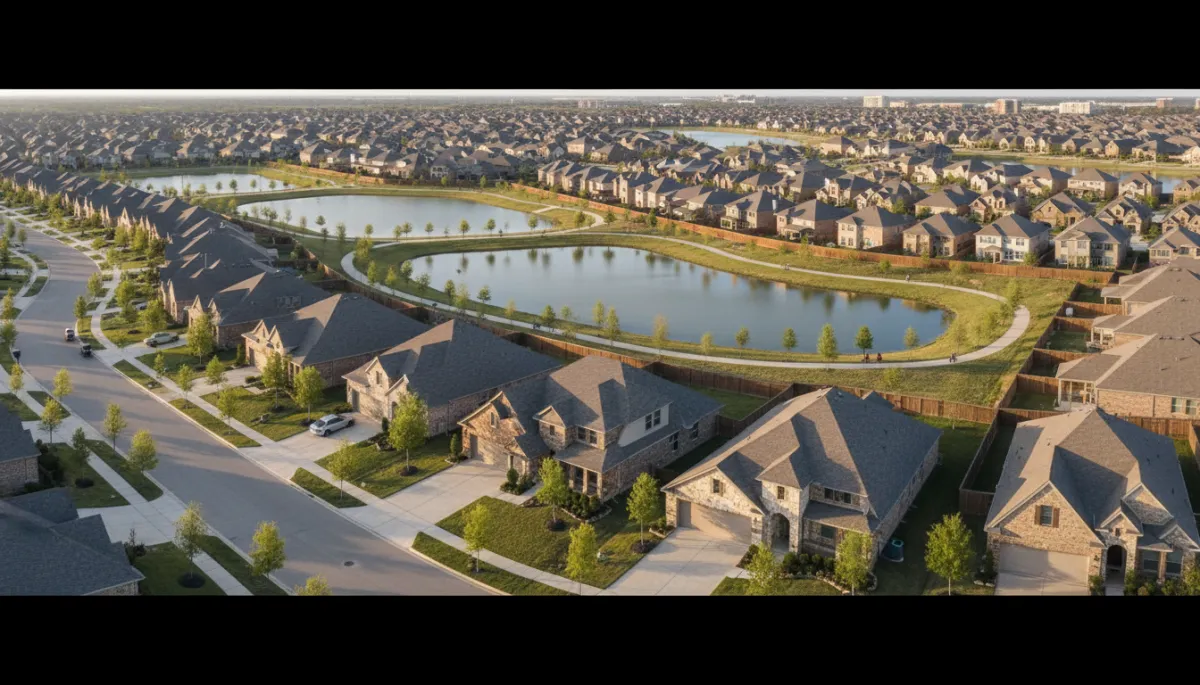
Master-planned suburbs are central to Houston’s outward expansion and housing strategy.
Risk, Resilience, and the Future of Real Estate Trends in Houston
As construction spreads across the metro, climate and weather risks are becoming more prominent considerations in planning and investment decisions. Recent analysis from Cotality notes that hail-related losses in Texas now rival those from major hurricanes, with more than 235,000 homes damaged by hail in 2025 alone. For Houston, which already contends with flooding and hurricane exposure, this additional hazard underscores the need for resilient building practices, upgraded roofing systems, and more robust insurance strategies. These factors are increasingly woven into Real Estate Trends, affecting everything from underwriting standards to the design of new subdivisions and commercial properties.
Yet, despite these challenges, investor interest remains strong. Multifamily occupancy hovers around 94%, industrial vacancies are low, and retail centers—especially those anchored by grocery or experiential tenants—are performing well. Capital continues to flow into Houston, drawn by its diversified economy, population growth, and relative affordability compared with coastal markets. As construction pipelines adjust to higher financing costs and shifting demand, the emphasis is likely to move toward quality, location, and resilience rather than sheer volume.
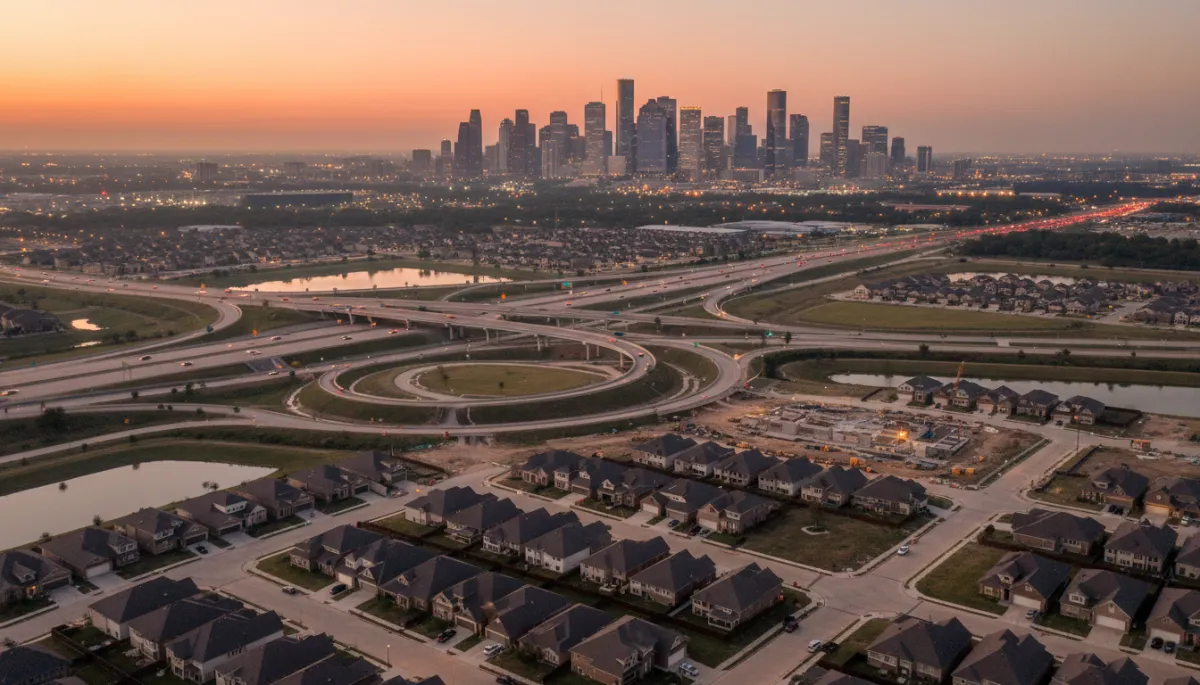
From the urban core to the suburbs, construction is reshaping how Greater Houston lives and works.
Conclusion: Construction as a Barometer of Houston Growth
The current wave of Construction Houston is more than a collection of isolated projects; it is a barometer of how the region is evolving. Industrial facilities near the port, airport expansions, and logistics hubs speak to Houston’s role in global trade. Suburban master-planned communities and build-to-rent neighborhoods reveal changing preferences in how residents want to live. Mixed-use town centers, adaptive reuse projects, and expanded parks reflect a growing emphasis on experience, connectivity, and public space. Together, these patterns of Houston Growth, Building Projects, and Urban Expansion are setting the stage for the city’s next decade.
For businesses, investors, and public leaders, the message is clear: opportunities in Houston remain substantial, but they are increasingly nuanced. Success will depend on understanding the interplay between sector-specific dynamics—industrial strength, cooling multifamily starts, selective office demand, resilient retail—and broader forces such as infrastructure spending, demographic shifts, and climate risk. Those who align their strategies with these evolving Real Estate Trends will be best positioned to benefit from Houston’s ongoing transformation, as the city continues to build the physical framework for its future economy and communities.
Numbers that finally make sense.
Tru-Financial Management gives contractors and small businesses clean books, real job costing, and tax-ready financials — all in one house.
Book a free consultation